
neovenator
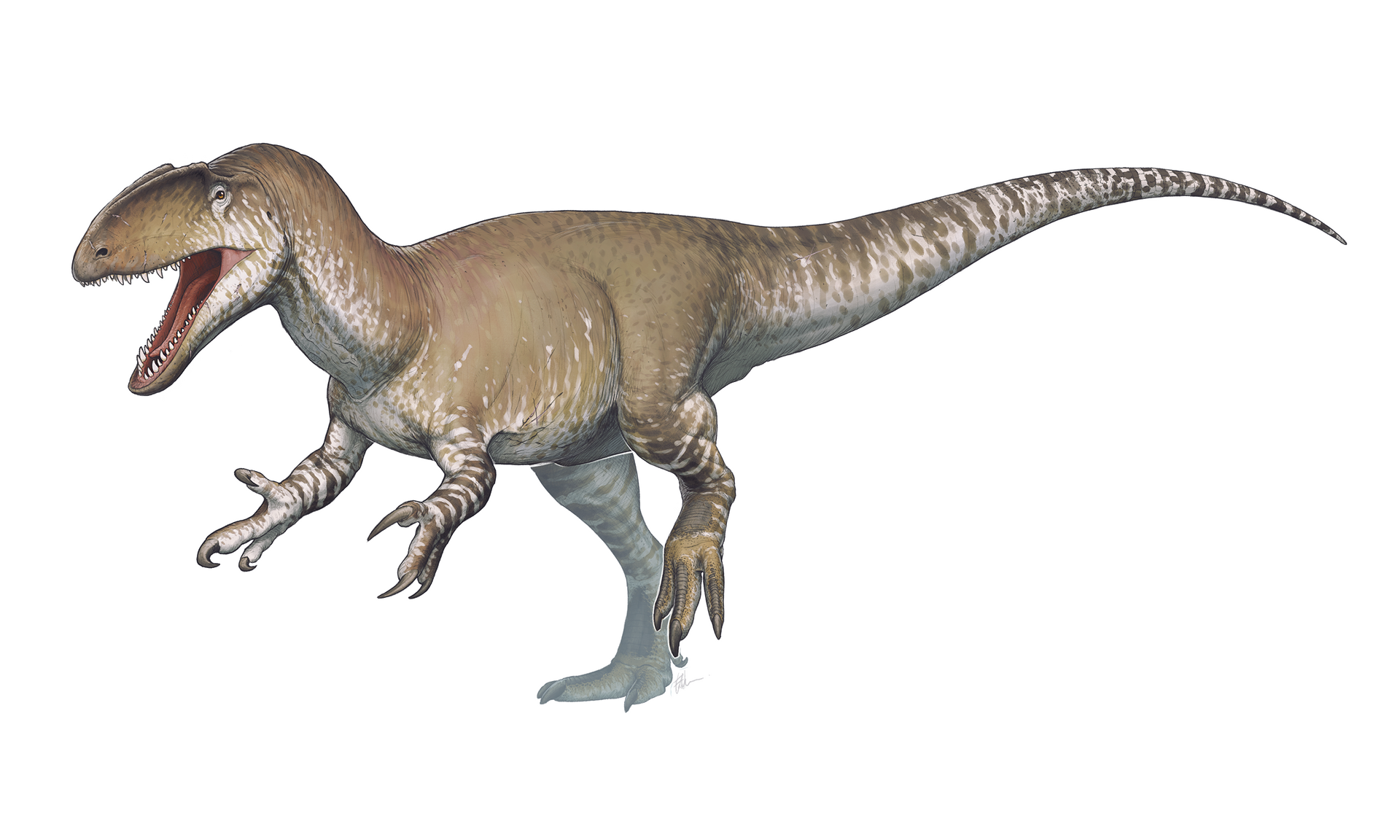
Neovenator was a theropod dinosaur that lived around 125 million years ago during the Early Cretaceous. First uncovered in 1978 on the Isle of Wight, England, it’s known as Neovenator salerii, named after the Salero family who owned the land. It had sharp, curved claws and a strong jaw filled with serrated teeth, typical of meat-eaters. Standing about 3 meters tall and stretching 7 to 8 meters long, it weighed roughly 1 to 1.5 metric tons. Fossils from the Wessex Formation suggest it hunted in the forested floodplains of what’s now southern England.
Part of the Neovenatoridae family, Neovenator was a fast, two-legged predator with a lightweight build and long legs for chasing prey. Its skull, about 75 cm long, had openings that made it lighter without losing strength, and its teeth were designed for slicing through flesh. The claws on its hands, especially the thumb, were likely used to grab or tear into smaller dinosaurs or other animals. As a top hunter in its environment, Neovenator roamed alone or in small groups, tackling the challenges of a competitive prehistoric world.