
Dimetrodon
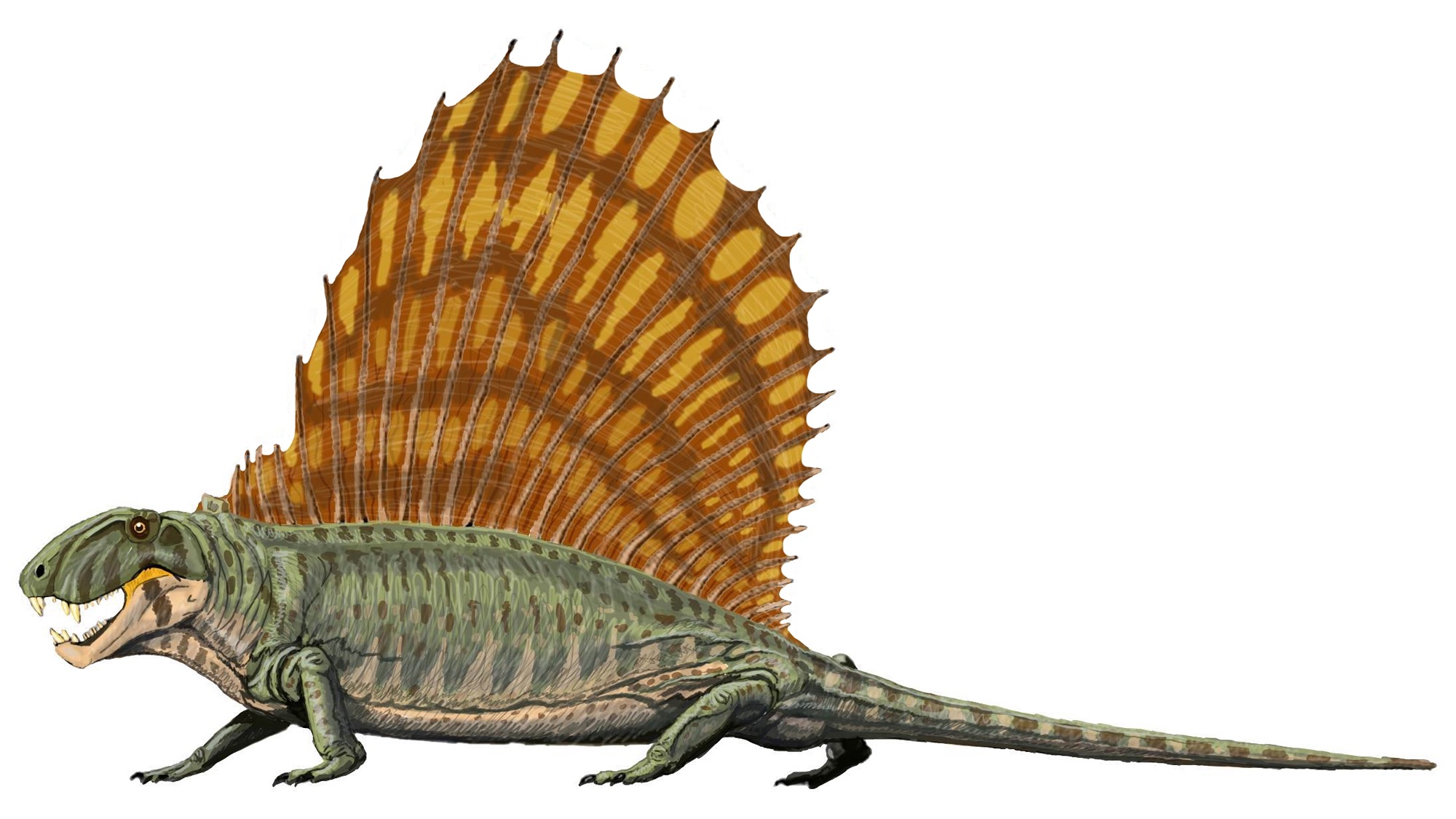
Often mistaken for a dinosaur, Dimetrodon was an apex predator that lived during the Early Permian period, approximately 295 to 272 million years ago. This means it went extinct roughly 40 million years before the first dinosaurs appeared. It is scientifically classified as a synapsid, a lineage of "mammal-like" creatures more closely related to modern humans and other mammals than to true reptiles. Its name means "two measures of teeth," referring to its unique dental structure: it possessed sharp, serrated canines for killing and smaller shearing teeth for tearing meat—a precursor to the diverse tooth types found in mammals today.
The most iconic feature of Dimetrodon was the massive dorsal sail on its back, formed by elongated bony spines extending from its vertebrae. While the exact function of this sail remains a subject of scientific debate, the American Museum of Natural History notes it may have been used for thermoregulation (absorbing or releasing heat), attracting mates, or intimidating rivals. Growing up to 4.6 metres (15 feet) in length, Dimetrodon walked with a sprawling, lizard-like gait and ruled its swampy ecosystem as a dominant carnivore, preying on fish, amphibians, and other early land vertebrates.