
champsosaurus
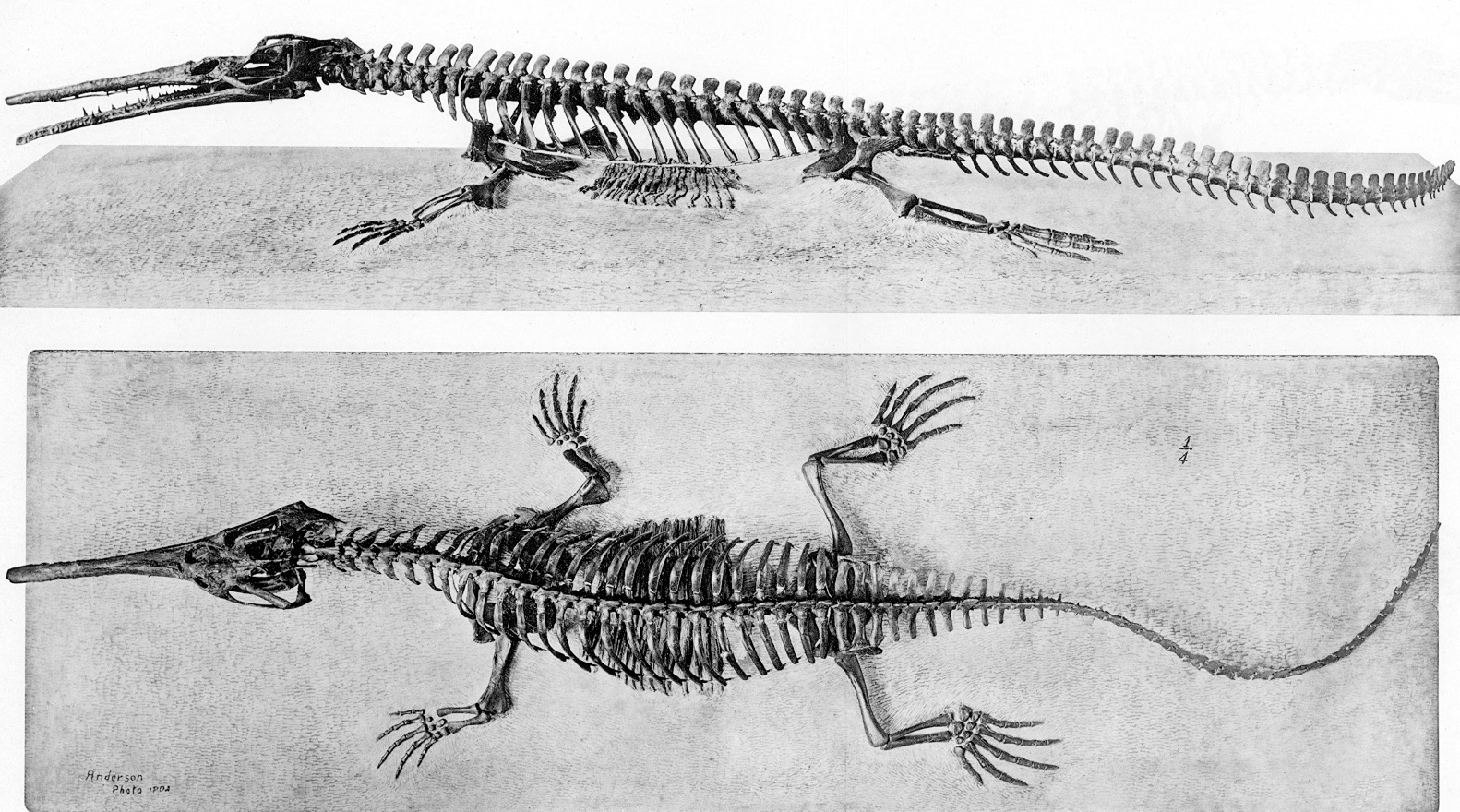
Champsosaurus was a crocodile-like, aquatic reptile belonging to the Choristodera, thriving in the Late Cretaceous to early Paleogene (approximately 70–50 million years ago) in freshwater environments across western North America. This slender, long-snouted predator, reaching lengths of up to 10 feet, had a streamlined body, paddle-like limbs, and a powerful tail, making it an adept swimmer in rivers and swamps. Its skull, with large eye sockets and nostrils positioned high, suggests it ambushed fish, crustaceans, and small vertebrates, much like modern gharials. Fossils from the Hell Creek Formation, including vertebrae, jaws, and skulls of species like Champsosaurus laramiensis and Champsosaurus ambulator, reveal adaptations for an aquatic lifestyle, with robust vertebrae supporting its flexible, eel-like swimming motion in the warm, subtropical wetlands of the Late Cretaceous.
Unlike true crocodilians, Champsosaurus lacked bony armour and had a unique reproductive strategy, with evidence suggesting it may have laid eggs in nests on riverbanks, similar to some modern reptiles. Its survival through the Cretaceous-Paleogene extinction event highlights its resilience, with fossils persisting into the Paleocene in formations like the Fort Union. In the Hell Creek environment, Champsosaurus coexisted with dinosaurs like Tyrannosaurus and Triceratops, thriving in lush, riverine habitats alongside turtles and fish. The differences between species, such as the more robust limbs of C. ambulator compared to the gracile C. laramiensis, suggest slight ecological variations, with their fossils providing a glimpse into the dynamic freshwater ecosystems just before the mass extinction that ended the dinosaur era.